"Monumental Interventions" In Support of Equal Justice Initiative
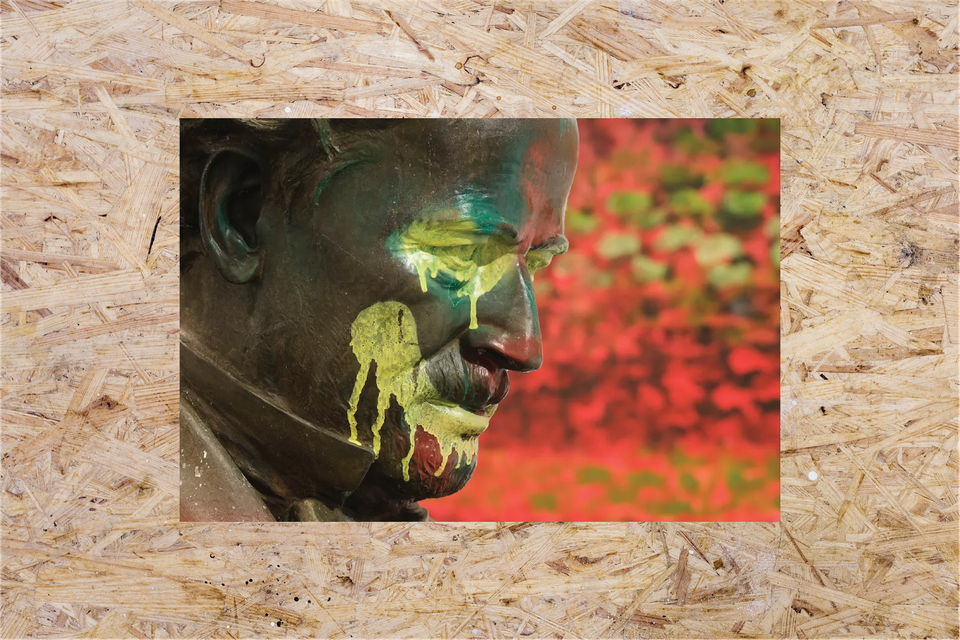
God bless New Orleans Jazz and Detroit Techno. God bless Southern BBQ, California wine and urban community gardens. God bless the Riot Grrrls and the break dancing crews from the Bronx. God bless the hymns of the Civil Rights movement, and the God bless the poster campaigns of Act Up. God bless drag queens. God bless low rider culture. God bless our immigrant history; and God bless our immigrant present. And God bless anyone who speaks truth to Power - whether it be in long a form novel, a poem, or a single line of graffiti scrawl. Happy 4th of July y'all.
🎇
The following article was printed in The Ardent's inaugural May issue; current issues are available at wonderful and life-affirming third spaces throughout Long Beach. Long live print.
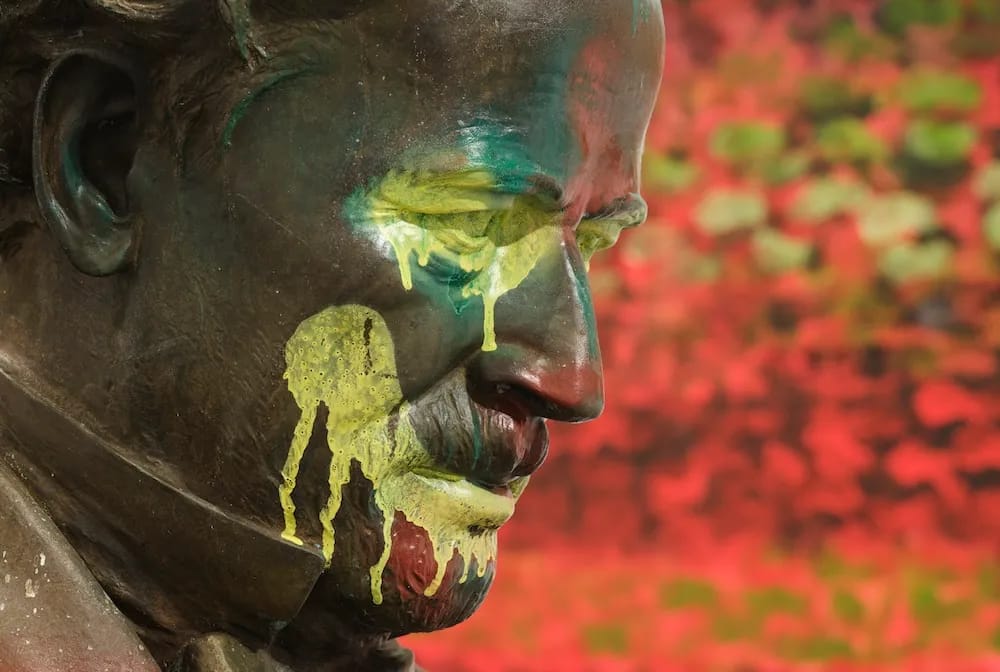
Monumental Interventions
by Matt Allison
The groundbreaking exhibition Monuments recently closed its 7 month run at MOCA’s Geffen Contemporary in Downtown LA. The show was a powerful exploration of legacy; examining both the power dynamics behind who creates the historical record, and the revolutionary spirit it takes to be the one who questions it.
For those who didn’t see it in person, a quick recap is in order: Artworks by 19 (mostly) contemporary artists were selected by co-curators Hamza Walker and Bennett Simpson to dialogue with nine decommissioned post-Civil War-era Confederate monuments.
The monuments had all been removed from their outdoor locations in Southern cities after public outcry and social unrest following the murder of George Floyd by the police in 2020. Christopher Knight, in the LA Times, reviewed it as the “most significant show in an American art museum right now.”
Monuments sets an incredibly exciting precedent. The possibility of a future where artists are the ones tasked with reconciling state-funded white supremacy makes our current socio-political nightmare seem almost bearable. It is the light at the end of a very long, very dark tunnel. However, if we are to move forward beyond the discrimination that defines both America’s past and present, we need to evolve past the dichotomous thinking that got us here in the first place.
At surface level, Monuments hinged on a binary that was immediately accessible to anyone who walked into the museum. On one side, you have the decommissioned monuments that represented the still unresolved and ongoing trauma of America’s systemic racism. On the other contemporary artists who embodied the perpetual struggle of what it means to be Black and Brown within that system. A role that oscillates from pure survival one moment, to being our country’s cultural vanguard and moral conscience the next.
It’s too much to ask from any one group, but piece after piece, the artists use truth (as opposed to myth) to achieve the moral high ground. One of the most striking examples of this dynamic was the enormous statue of Andrew Jackson and Robert E. Lee riding on horseback that was paired with the equally large-scale sculpture by Hank Willis Thomas titled “A Suspension of Hostilities.”
The installation joined the two Confederate Generals with a full-size replica of the General Lee car from 70s TV show, The Dukes of Hazzard, suspended in a permanent nosedive position. A screaming orange depiction of failure, the Dodge Charger’s famous rooftop Confederate Flag points directly at the two of its most iconic representatives; an indictment that left them both looking ugly, outdated, and defeated.
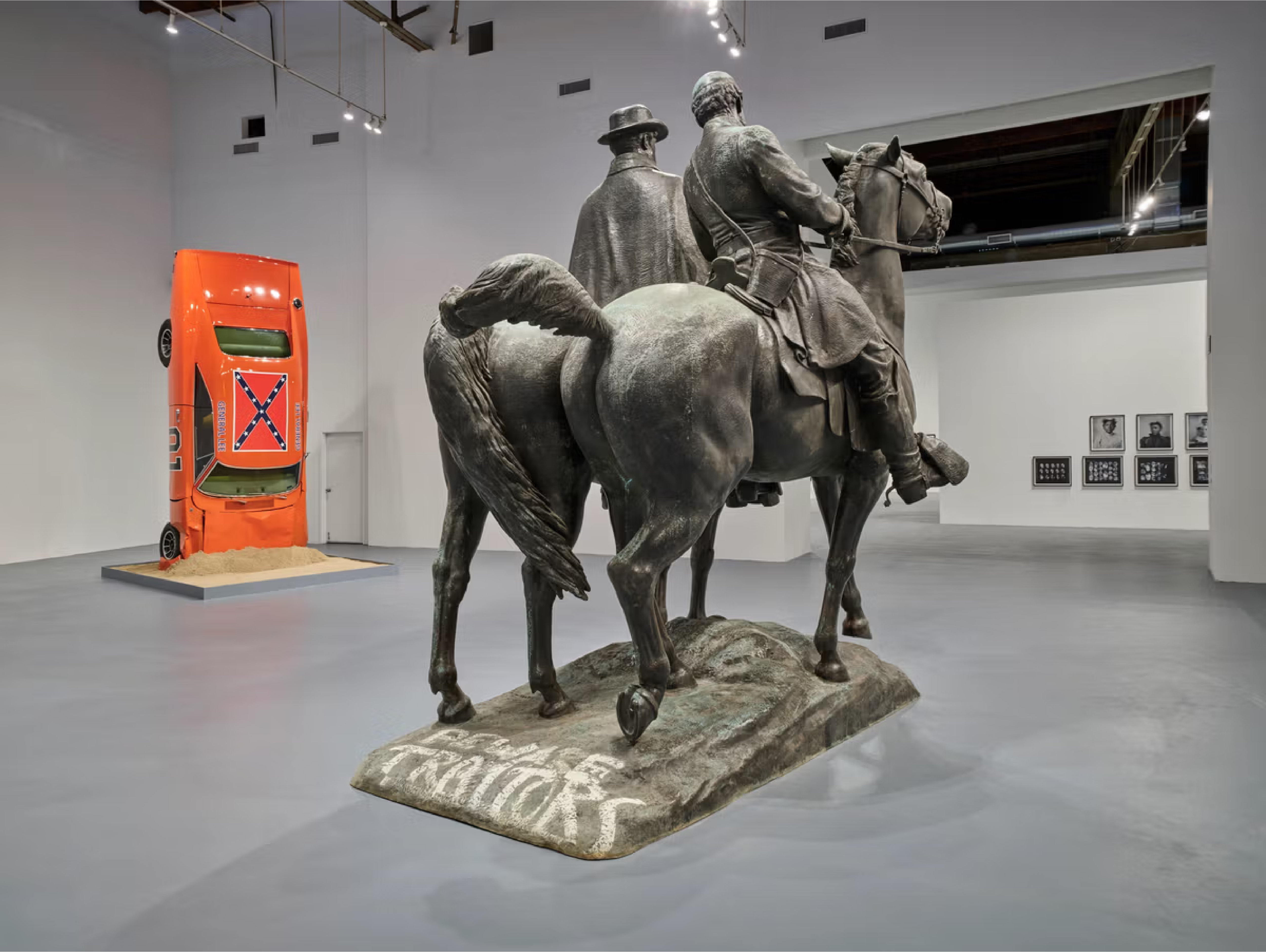
The way the two works mirrored each other across space and time was a masterful curatorial choice. The combination of historical record and pop culture illustrated how deeply racist ideology (and its iconography) is embedded in American life. In fact, the juxtaposition created such a powerful statement that one could’ve been forgiven for believing the dialogue, which consisted solely between these two parties. It wasn’t until you walked around to the back of the monuments that a third, and just as essential voice entered the picture: That of the protester who painted BEWARE TRAITORS on the statue’s base.
This 3rd anonymous voice of protest was present throughout Monuments, making itself heard through spray-painted scrawl and splattered paint. It was both righteous and indigent. Split-second responses 250 years in the making. It was the voice of the people, and also responsible for some of the most visually dynamic and attention-demanding aspects of the show. I simply cannot forget the electrified cotton candy pink paint that was used to shatter the feigned dignity of Confederate President Jefferson Davis’ patinated bronze.
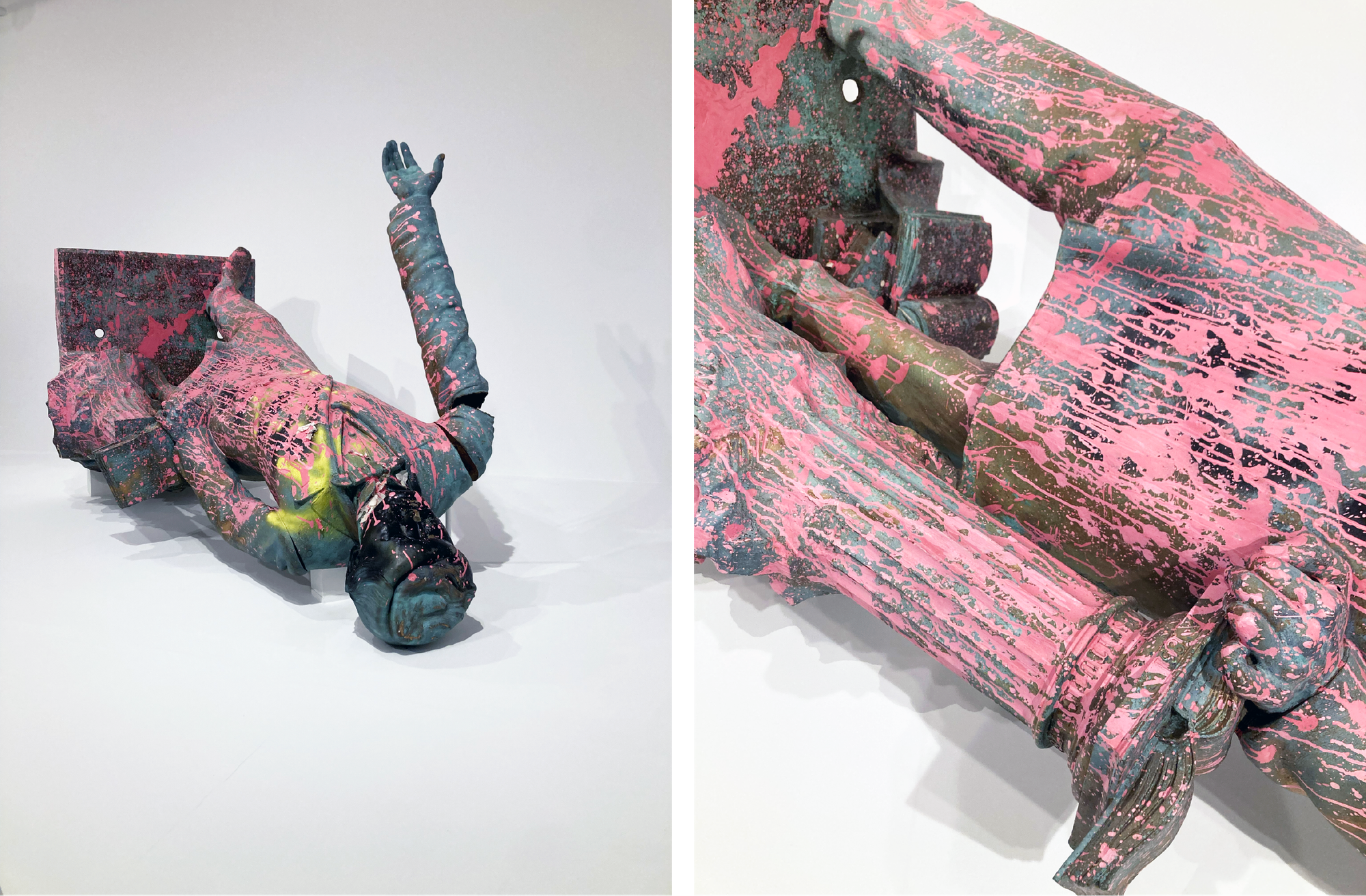
The curatorial statement on MOCA’s website referred to the protestor’s action as vandalism. And while technically true, this as a missed opportunity to fully contextualize its place in the show. Vandalism suggests a lack of moral principle; like dirty jokes in a bathroom stall, or brain dead rocks thrown through abandoned windows. Nothing about what the protestors did in Charlottesville, Baltimore or Richmond was rebellion for rebellion's sake. It meant (and still means) much more than that.
The word I’d like to propose allows us to follow a binary-smashing trajectory where each party involved in the making of Monuments isn’t just reduced to a single good guys vs. bad guys dynamic. What the protestors did, with buckets of paint and spray cans in hand, would be more accurately described as interventions.
The protesters forever altered the trajectory of each monument. Not because the paint was permanent and impossible to erase (city municipalities have long played cat and mouse with removing the work of graffiti artists). The monuments were forever altered because the moment the protestors’ paint hit their surface, each of them was transformed from a relic of an outdated and inherently misguided ideology to a living document reflecting the will of the people. They were instantaneously made relevant again. That's what made their presence in the exhibition so powerful. These toppled statues didn’t memorialize the lost cause; they honored the bravery of those fighting on the front line of our ongoing revolution. They represented the everyday folks with the most to lose. The ones who took it upon themselves, under the threat of real terror by militarized police and Neo-Nazi terror groups, to force the past into the present and demand that justice be served.
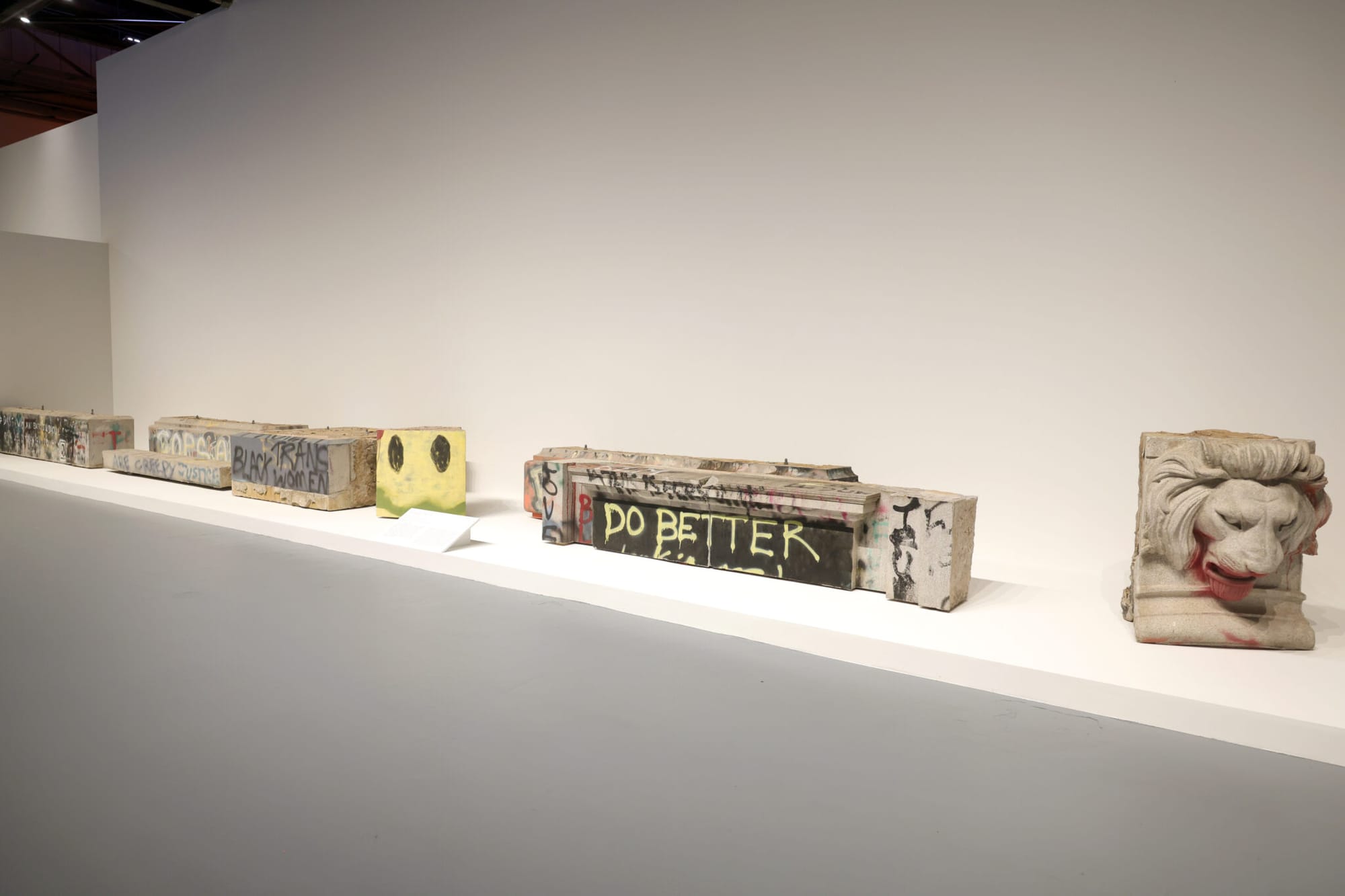
Adopting this threefold view of Monuments allows us a deeper, richer understanding of the dynamics behind this truly remarkable show. It requires us to acknowledge all of the voices that contribute to it, not just the ones that make for a neatly packaged dichotomy.
It also rightfully alleviates some of the pressure put on the artists and their work. The solutions we desperately need to move America forward won’t materialize if they originate exclusively from a museum. There is an inherent distance to that experience, no matter how raw the content. We not only need to see, but also to touch. We can’t just witness; we need to participate actively.
We should be genuinely grateful for what the artists and curators of Monuments were able to accomplish with this show. All the time, recognition and six-figure fabrication budgets in the world don’t change the fact that artists, once they’ve left the museum spotlight, are still just humans. And in America, especially when you are Black and/or a woman, that means your fundamental rights of life, liberty, and the pursuit of happiness are constantly at risk. The stakes are deadly serious for all involved.
It is people who bring down monuments. When art critic Peter Schjeldahl wrote about how New York City office workers successfully lobbied to remove Richard Serra’s Tilted Arc, he brought up “the festering split in our society down the middle of the phrase ‘public art’.” In the ensuing years, that festering split has only become more raw as our collective psyche screams for truth and reconciliation. One doesn’t need to look any further than the now-empty plinths where monuments to Caesar Chavez once stood to see that our past method of memorializing the myth isn’t working.
We are committed to changing the narrative about race in America. EJI produces groundbreaking reports, an award-winning calendar, and short films that explore our nation’s history of racial injustice. EJI operates the Legacy Sites—The Legacy Museum, The National Memorial for Peace and Justice, Freedom Monument Sculpture Park, and Montgomery Square—as part of our national effort to create new spaces, markers, and memorials that address the legacy of slavery, lynching, and racial segregation that shapes many issues today.
God bless Angela Davis. God bless Cyndi Lauper.
A call to action, commonly known by the initialism CTA, is a strategic marketing tool designed to spur an immediate response from an audience, guiding them toward a specific action.
A call to action, commonly known by the initialism CTA, is a strategic marketing tool designed to spur an immediate response from an audience, guiding them toward a specific action.
NNH began with the (perhaps naive) hope that it could be of service to folks who needed it. I wasn't exactly sure who that meant- Was it the potential readership? The Mutual Aid groups that would be featured in each post? Or other creative types (equally fed up with the constant "me at the center" paradigm required by our Tech Overlords) looking for a place to get weird and do some good.
SO, if you're out there- whomever you may be- Let me know. Leave a comment. Click a link. Tell a friend. Pitch an idea. Do anything to feel less alone in the world.

Member discussion